


Content Coming Soon...
How Shoulder
Replacement Is Done
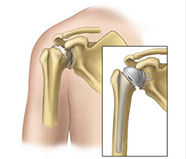
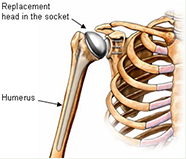
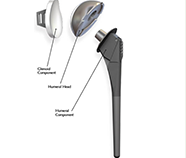
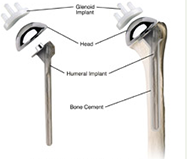
The top end of your upper arm bone is shaped like a ball. Muscles and ligaments hold this ball against a cup-shaped part of the shoulder bone. Surgeons usually replace the top of the upper arm bone with a long metal piece, inserted into your upper arm bone that has a rounded head. If the cup-shaped surface of your shoulder bone that cradles your upper arm bone is also damaged, doctors smooth it and then cap it with a plastic or metal and plastic piece.
Why Shoulder
Replacement Is Done
Following conditions can cause the necessity for a shoulder replacement surgery:
- Osteoarthritis (Degenerative Joint Disease)
- Rheumatoid Arthritis
- Post-traumatic Arthritis
- Rotator Cuff Tear Arthropathy
- Avascular Necrosis (Osteonecrosis)
- Severe Fractures
What to Expect
Before and After Surgery
Your doctor may recommend that you take antibiotics before and after the surgery to reduce the risk of infection. If you need any major dental work, your doctor may recommend that you have it done before the surgery. Infections can spread from other parts of the body, such as the mouth, to the artificial joint and cause a serious problem.
You will have intravenous (IV) antibiotics for about a day after surgery. You will also receive medicines to control pain and sometimes anticoagulants.
After the surgery, a bandage is applied on the shoulder and probably a drain to collect fluid and keep it from building up around the shoulder joint. You may have a catheter connected to your bladder, so you don't have to get out of bed to urinate. You may also have a compression sleeve on your arm. This sleeve squeezes your arm to keep the blood circulating and to help prevent blood clots.
A physiotherapist may begin gentle exercises of your shoulder on the day of surgery or a day after your surgery. These exercises are done to relax your arm and let the physiotherapist move your arm for you.
Most people who have shoulder replacement surgery are able to sit up and get out of bed with some help later on the day of surgery.
Recovery from
Shoulder Replacement Surgery
Rehabilitation after a shoulder replacement starts right away. It is very important that you do it. The main goal of rehabilitation is to allow you to move your shoulder as far as possible so you can perform daily chores easily. Most people eventually regain normal shoulder motion after 6 to 9 months of surgery. It is very important that you take part in physical therapy both while you are in the hospital and after you are released from the hospital to get the most benefit from your surgery.
Rehabilitation typically continues after you leave the hospital until you are able to function more independently and you have recovered as much strength, endurance, and mobility in your shoulder as you can.
