


In the knee joint, there is a layer of smooth cartilage on the lower end of the femur( thighbone), the upper end of the tibia (shinbone) and the undersurface of the kneecap (patella). This cartilage serves as a cushion and allows for smooth motion of the knee. Arthritis is a wearing away of this smooth cartilage. Eventually it wears down to bone. Rubbing of bone against bone causes pain, swelling and stiffness.
SELECT
Knee Replacement
Click on a question to drop down to the answer
What is a total knee replacement?
A total knee replacement is really a cartilage replacement with an artificial surface. The knee itself is not replaced, as is commonly thought, but rather an artificial substitute for the cartilage is inserted on the end of the bones. This is typically done with a metal alloy on the femur and plastic spacer on the tibia and kneecap (patella). This creates a new, smooth cushion and a functioning joint that does not hurt.
What are the results of total knee replacement?
Knee-replacement surgery has a high rate of success in eliminating pain and restoring range of motion; 95 to 98 percent of patients achieve good to excellent results.
When should I have knee-replacement surgery?
Arthritis of Knee is treated conservatively in the initial stages.When the knee pain is severe enough to restrict activities of daily living then the decision for Knee Replacement Surgery should be taken.
Am I too old for this surgery?
Age is not a problem if you are in reasonable health and have the desire to continue living a productive, active life.We have operated upon patients who were 95 years old.
How long will my new knee last, and can a second replacement be done?
We expect most knees to last more than 15 years.
What are the major risks?
Most surgeries go well, without any complications. Infection and blood clots are two serious complications that concern us the most. To avoid these complications, we use antibiotics and blood thinners. We also take special precautions in the operating room to reduce risk of infections, such as wearing "space suits," which are full-head and -body operating garments that are exceptionaly sterile. The chances of acquiring an infection or developing a blood clot are 1 percent or less.
Will I need blood?
You might need blood after the surgery. You may donate your own blood, if you are able, or use the community-blood-bank supply.
When will I be able to get out of bed?
You will be made to stand on the evening of the surgery itself.The next day you will walk and go yourself to the toilet.The 3rd day you will be made to climb stairs.The 4th day you will bw discharged.
How long will I be in the hospital?
Most knee-replacement patients will be hospitalized for four days after their surgery.
How long does the surgery take?
The surgery itself may take as little as 30 minutes.We reserve approximately two to two-and- a-half hours for surgery. Some of this time is taken by the operating room staff to prepare for the surgery.
What are my anesthesia options?
You may have either general anesthetic, which most people call "being put to sleep" or a spinal anesthetic. The choice is between you and the anesthesiologist.
Will I have pain after surgery?
Due to scientific advancement,you will be kept comfortable with appropriate medication.The day of surgery, pain is controlled in most patients with a special pump that delivers the drug directly into their IV line or Epidural cathethers. Generally most patients are able to stop very strong medication within one or two days.
How long and where will my scar be?
The scar will be approximately 6–8 inches long. It will be straight down the center of your knee unless you have previous scars, in which case your surgeon may make the incision along the prior scar. There will be some numbness around the scar. This will not cause any problems.
Will I need a walker, crutches, or cane?
Yes. Until your muscle strength returns after surgery, you will need a walker, a cane or crutches.
Will I need any other equipment?
Other equipment is available, such as a three-in-one bedside commode. A tub bench and grab bars in the tub or shower may also be necessary. Your home equipment needs will be evaluated and arranged while you are in the hospital. If needed, you will also be taught by an occupational therapist to use adaptive equipment to help you with lower-body dressing and bathing.
Where will I go after discharge from the hospital?
Most patients go directly home when discharged.
Will I need help at home?
Yes. For the first several days or weeks, depending on your progress, you will need someone to assist you with meal preparation, housekeeping, etc. If you go directly home from the hospital, family or friends must be available to help.
Will I need physical therapy when I go home?
With improvement in Joint designs and refinement of surgical techniques no Physical therapy is required.
How long until I can drive and get back to normal?
The ability to drive depends on whether surgery was on your right leg or your left leg and the type of car you have. If the surgery was on your left leg and you have an automatic transmission, you could be ready to drive within two weeks. If the surgery was on your right leg, your driving might be restricted as long as six weeks.
When will I be able to get back to work?
We recommend that most people take at least three weeks off from work, even if your job allows you to sit frequently. More strenuous jobs will require a longer absence from work.
How often will I need see my doctor after surgery?
Your first post-operative office visit will be two to four weeks after discharge. The frequency of follow-up visits will depend on your progress.
Will my activites be limited after surgery?
Yes. High-impact activities such as contact sports, running, singles tennis and basketball are not recommended. Injury-prone sports such as downhill skiing are also dangerous for the new joint. You are encouraged to participate in low-impact activities such as walking, dancing, golfing, hiking, swimming, bowling and gardening.
Will I notice anything different about my knee?
Yes. You may have a small area of numbness to the outside of the scar, which may last a year or more and is not serious. Kneeling may be uncomfortable for a year or more. Some patients notice some clicking when they move their knee. This is the result of the artificial surfaces coming together and is not serious.
Where should be the surgery performed?
The Knee Replacement surgery should be performed in a Multispeciality set up where services of intensivists and cardiologist are readily available.Also a Class 100 Operation theatre with Body Exhaust Suits should be there in the hospital.
How will I know ifl need a shoulder replaced?
Oflen the first clues are pain, limited range of motion in the arm and loss of strength. The arthritic process that renders the shoulder weak and painful occurs overtime and may have been precipitated by a wearing down of cartilage that covers bone surfaces, a tear in the rotator cuff (a tendon surrounding the shoulder joint) or necrosis (dead tissue) in bone from a loss in blood supply to bone. These situations, often occurring decades in the past may have resulted from a work-related event contact or other sports, an automobile accident or from rheumatoid arthritis itself.
What does a total shoulder replacement implant consist of?
A shoulder replacement implant consists of three parts:
- A new socket (glenoid) that is implanted within the shoulder blade (scapula)
- A new 'ball' to replace the head of the top of the arm bone (humerus)
- A stem that secures the ball within the arm bone
These materials are comprised of state-of-the-art titanium or chrome cobalt stainless steel and polyethylene plastic.
What does shoulder replacement surgery entail?
Having a shoulder replaced is a major surgical procedure performed in the operating room. During this procedure, your surgeon removes damaged bone and cartilage, resurfaces the socket within your shoulder blade and replaces the ball or head of the humerus at the top of your arm bone. Learn more about shoulder replacement surgery.
How long is recuperation and rehabilitation after shoulder replacement surgery?
Your recuperation and rehabilitation begins while you are still in the hospital and often on the same day as your surgery. Learn more about shoulder replacement rehabilitation.
Will I have restored range of motion after my surgery?
After surgery and rehabilitation, you will have much more range of motion than what you had prior to your surgery. How much range of motion you achieve will depend upon your own unique circumstances and anatomy. Most patients are quite satisfied with the painless restored motion they find they have following their surgery and rehabilitation
Why do I need a dental clearance before surgery?
All patients having joint replacement surgery, as well as patients having heart valve replacement surgery, must have clearance from their dentists showing that there is no infection (such as an abscessed tooth) in the mouth. The reason is that infection in one part of the body can travel to the new joint or valve and cause infection in these newly replaced parts.
What happens to the shoulder to cause it to become arthritic and painful?
The shoulder joint allows more range of motion than any other joint in the body. The cartilage that covers bone surfaces in the joint can begin to wear down, causing stiffness and pain. Some medical conditions - inflammation or rheumatoid arthritis - also can cause this type of degeneration. Direct injury to the shoulder joint from contact sports, an accident or a fall can destabilize the joint and cause uneven wear, eventually leading to arthritis.
If I have arthritis in one shoulder, will I develop arthritis in the other shoulder?
This is usually not the case, but can happen.
How soon will I be able to drive after surgery?
You will be able to drive approximately three to six weeks after your surgery.
Will I be able to play basketball or golf after shoulder replacement surgery?
Yes. You will be able to play basketball and golf at the end of your rehabilitation time or about 12 weeks after surgery. But you will be advised to go slowly, gradually increasing your time doing these activities.
Will I still be able to bowl after shoulder replacement surgery?
Some patients do continue to bowl. We advise caution to preserve the joint since it is artificial.
How do I know if I am a candidate for a partial shoulder replacement?
Patients that are younger and require joint durability, such as carpenters, drywall workers, and those working building trades, may have early failure of the polyethylene socket and would be better candidates for partial shoulder replacement Athletes also fall into this category.
Will I be aware of the implant in my shoulder?
Usually not.
How long will the shoulder implant last?
The answer depends on several factors, such as your age, physical condition and activity level. Because these devices are made with stronger materials and provide a secure fit a shoulder replacement is expected to last the remainder of patients' lives. Most people who have a shoulder replaced are older and have fewer physical demands.
Are most people who have a shoulder replaced older patients?
Most patients are in late, middle age or older, but the shoulder joint can degenerate from a number of factors that have nothing to do with age. Athletes in middle age who have participated in contact sports have had shoulders replaced. A traumatic injury from an accident or fall also may require that the shoulder be replaced. Rheumatoid arthritis at any age can affect the shoulder and cause degeneration.
Will I be able to go through the metal detector at airports?
Yes. You will be able to go through a metal detector. Some metal detectors are more sensitive than others and you may set off the detector. We give all joint replacement patients a card to carry in a wallet or purse to show to security at the airport.
What happens if I get an infection in my new shoulder?
We may have to remove it and treat you with antibiotics for six weeks to cure the infection prior to re-implanting new sterile components.
I have heard that the device can loosen and that I will have to have another surgery to fix it. is this true?
Over a long period of time, perhaps. We have many options for what is called 'revision' surgery, and implants are lasting longer now due to improved materials and geometry.
What is a hip replacement?
A hip replacement is a surgical procedure in which the diseased parts of the hip joint are removed and replaced with artificial parts. The goal of hip replacement is to allow you to move easily with less discomfort.
Who should have a hip replacement?
When hip pain severely limits your ability to walk, or perform even simple activities, hip replacement should be considered.
Is there an alternative to hip replacement?
There are a number of conservative measures your physician may suggest before you consider hip replacement. This includes anti-inflammatory drugs, cortisone injections and physical therapy. Hip replacement is only recommended after all other treatment methods have failed to adequately relieve your symptoms.
How long is the hospital stay?
The average hospital stay for a hip replacement patient is around 3-4 days. Patients having surgery on Monday typically go home on Wednesday afternoon or Thursday morning.
Will I go home after surgery?
We strongly encourage patients to go home after discharge; there is usually no need for a nursing home. Keep in mind that healing and recovery times vary with each person. Some older patients who live alone may require a short stay at a Skilled Nursing Facility for a few days to a few weeks after they leave the hospital.
How long is recuperation?
Recovery varies with each individual. You will use a walker for approximately 2-4 weeks after the operation. You will quickly progress to a cane. Most people gradually increase their activities and play golf, doubles tennis, go bike riding, hiking, swimming and dancing, within 12 weeks after surgery.
When can I drive?
Based on your progress, you may be able to drive a car in 4 weeks. You should check with your surgeon before driving.
Will I need a blood transfusion?
The majority of hip replacement patients do not require a transfusion after surgery.
What is the success rate?
The success rate, elimination of pain and return to function, is very high for total hip replacement-98 to 99%.
Are there complications?
As with any surgery, there is a risk of complications after hip replacement surgery. However, they are quite rare. We take measures to prevent complications such as blood clots and surgical site infections.
Will I have pain?
Yes, you will have some pain or discomfort at the surgical site. During your stay we will do everything we can to make you comfortable. There are several medications and pain management treatment we can use to reduce your discomfort. The most important thing to remember is, unlike the pain you had prior to surgery, the pain you experience after joint replacement will get better.
How long will my new hip last?
The results of modern cement less hip replacement are extraordinarily good (98% short term success, and over 90% still working at 20 years!). Many will last the full lifetime of the recipient, depending on the age of the patient. Others, particularly in very young and active people, will have some wear or loosening in time that will require revision surgery. We are recommending TOTAL HIP REPLACEMENT in younger patients now because the results have been very good.
Will I need rehab after total hip replacement?
Maybe. Many of my patients just do home exercises and the hip comes along very nicely. we can arrange physical therapy for those patients who want it.Patient will be walking and climbing stairs in few hours according to associated factors like age,anesthesia used,condition of joint etc.
What activities can I do after a Hip Replacement? How fast can I get going?
Recently, tennis, golf, skiing, bike riding, swimming, and yoga are just fine. Golf at three weeks is often OK. You can drive your car immediately if it is your left hip.
Why Do People Have Hip Replacement Surgery?
For the majority of people who have hip replacement surgery, the procedure results in:
- a decrease in pain
- increased mobility
- improvements in activities of daily living
- improved quality of life.
Is a Cemented or Uncemented Prosthesis Better?
The answer to this question is different for different people. Because each person’s condition is unique, the doctor and you must weigh the advantages and disadvantages.
Cemented replacements are more frequently used for older, less active people and people with weak bones, such as those who have osteoporosis, while uncemented replacements are more frequently used for younger, more active people.
What are the major risks?
Most surgeries go well without any complications. Infection and blood clots are two serious complications that concern us the most. To avoid these complications, we use antibiotics and blood thinners. We also take special precautions in the operating room to reduce risk of infections. The chances of this happening in your lifetime are 1 percent or less. Dislocation of the hip after surgery is a risk. Your surgeon and physical therapist will discuss ways to reduce that risk.
Can I talk to someone who has had a hip replacement?
Yes! We have volunteers that have had one or more hip replacements and would be happy to talk to you. E-mail our office and we will be pleased to put you in touch with other people who have gone through the program.
What is total elbow replacement?
Although elbow joint replacement is much less common than knee or hip replacement, it is just as successful in relieving joint pain and returning people to activities they enjoy. In 2010, about 3,000 people in the U.S. had elbow replacement surgery.
What is the anatomy of the elbow joint in human body?
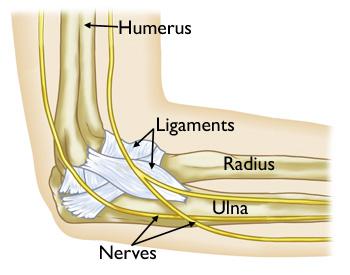
The elbow is a hinge joint which is made up of three bones:
- The humerus (upper arm bone)
- The ulna (forearm bone on the pinky finger side)
- The radius (forearm bone on the thumb side)
The surfaces of the bones where they meet to form the elbow joint are covered with articular cartilage, a smooth substance that protects the bones and enables them to move easily. A thin, smooth tissue called synovial membrane covers all remaining surfaces inside the elbow joint. In a healthy elbow, this membrane makes a small amount of fluid that lubricates the cartilage and eliminates almost any friction as you bend and rotate your arm. Muscles, ligaments, and tendons hold the elbow joint together.
How is the elbow replacement done?
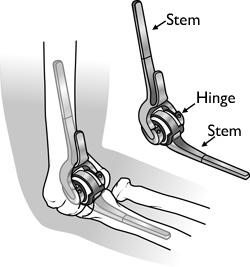
In total elbow replacement surgery, the damaged parts of the humerus and ulna are replaced with artificial components. The artificial elbow joint is made up of a metal and plastic hinge with two metal stems. The stems fit inside the hollow part of the bone called the canal.
There are different types of elbow replacements, and components come in different sizes. There are also partial elbow replacements, which may be used in very specific situations.
What are the indications of total elbow replacement ?
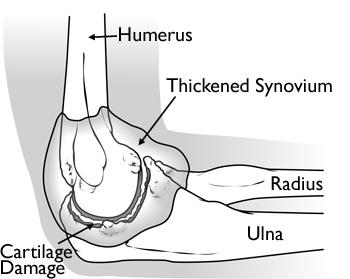
Several conditions can cause elbow pain and disability, and lead patients and their doctors to consider elbow joint replacement surgery.
- Rheumatoid arthritis
- Osteoarthritis
- Joint disease
- Arthritis after injury (traumatic arthritis)
- Arthritis after previous surgery
- Acute fractures in the upper or lower arm near the elbow
- Tumors or tumor resection
The surfaces of the bones where they meet to form the elbow joint are covered with articular cartilage, a smooth substance that protects the bones and enables them to move easily. A thin, smooth tissue called synovial membrane covers all remaining surfaces inside the elbow joint. In a healthy elbow, this membrane makes a small amount of fluid that lubricates the cartilage and eliminates almost any friction as you bend and rotate your arm. Muscles, ligaments, and tendons hold the elbow joint together.
How to prepare for surgery?
Medical Evaluation
If you decide to have elbow replacement surgery, your orthopaedic surgeon may ask you to schedule a complete physical examination with your family physician several weeks before surgery. This is needed to make sure you are healthy enough to have the surgery and complete the recovery process. Many patients with chronic medical conditions, like heart disease, must also be evaluated by a specialist, such a cardiologist, before the surgery.
Medications
Be sure to talk to your orthopaedic surgeon about the medications you take. Some medications may need to be stopped before surgery. For example, the following over-the-counter medicines may cause excessive bleeding and should be stopped 2 weeks before surgery:
- Non-steroidal anti-inflammatory medications, such as aspirin, ibuprofen, and naproxen sodium
- Most arthritis medications
If you take blood thinners, either your primary care doctor or cardiologist will advise you about stopping these medications before surgery.
What planning to do at home before surgery?
Making simple changes in your home before surgery can make your recovery period easier.
For the first several weeks after your surgery, it will be hard to reach high shelves and cupboards. Before your surgery, be sure to go through your home and place any items you may need afterwards on low shelves.
When you come home from the hospital, you will need help for a few weeks with some daily tasks like dressing, bathing, cooking, and laundry. If you will not have any support at home immediately after surgery, you may need a short stay in a rehabilitation facility until you become more independent.
Planning before the surgery?
You will most likely be admitted to the hospital on the day of your surgery. After admission, you will be taken to the preoperative preparation area and will meet a doctor from the anesthesia department.
You, your anesthesiologist, and your surgeon will discuss the type of anesthesia to be used. In most total elbow replacement surgeries, a general anesthetic that puts you to sleep for the entire operation is used.
How is elbow replacement done?
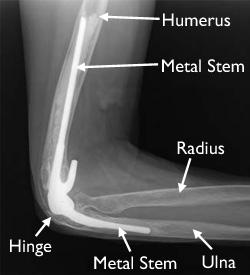
To reach the elbow joint, your surgeon will make an incision (cut), usually at the back of the elbow. After making the incision, your surgeon will gently move muscles aside to get access to the bone. After removing scar tissue and spurs around the joint, your surgeon will prepare the humerus to fit the metallic piece that will replace that side of the joint. The same preparation is done for the ulna.
The replacement stems are placed into the humerus and ulna bones, and kept in place with a bone cement. The two stems are connected by a hinge pin. After the wound is closed, a padded dressing is then placed to protect the incision while it heals.
What are the implants used ?
The metal replacement parts are made of chrome-cobalt alloy or titanium and there is a liner made of polyethylene (plastic). The bone cement is made of polymethylmethacrylate (acrylic, a type of plastic).
What is the recovery pattern after surgery?
Your medical team will give you several doses of antibiotics to prevent infection. Most patients are able to eat solid food and get out of bed the day after surgery. You will most likely stay at the hospital 2 to 4 days after your surgery.
How is pain managed after surgery?
After surgery, you will feel some pain, but your surgeon and nurses will provide medication to make you feel as comfortable as possible. Talk with your surgeon if postoperative pain becomes a problem.
What is rehabilitation protocol after post surgery?
A careful, well-planned rehabilitation program is critical to the success of an elbow replacement. You will be taught some exercises for your hand and wrist to avoid stiffness and help to control swelling. You will do gentle elbow range-of-motion exercises as the incision heals. Your doctor may prescribe therapy or may teach you how to do the exercises yourself.
You will most likely not be allowed to put any weight on your arm or push against resistance with your hand until about 6 weeks after your surgery.
What can be the complications ?
Most complications can be successfully treated. Possible complications are described below.
Infection
Infection is a complication of any surgery. In elbow replacement, infection may occur in the wound or deep around the artificial components. It may happen while in the hospital or after you go home. It may even occur years later. Any infection in your body can spread to your joint replacement.
Minor infections in the wound area are generally treated with antibiotics. Major or deep infections may require more surgery and removal of the components.
Talk to your doctor about obtaining a prescription for antibiotics any time you schedule an invasive procedure, such as surgery or dental procedures. These kinds of procedures cause a temporary spilling of bacteria into your bloodstream which can cause an infection in the replaced joint.
Implant Problems
Although implant designs and materials, as well as surgical techniques, continue to advance, the implant may wear down and the components may loosen. The plastic liner (called the bushings) can wear out, and may need to be replaced. Excessive wear, loosening, or implant breakage may require additional surgery (called a revision procedure).
Nerve Injury
Nerves in the vicinity of the joint replacement may be damaged during surgery, although this type of injury is infrequent. Over time, these nerve injuries typically improve without needing treatment.
Wound Healing
It is important to carefully protect your incision to avoid wound healing problems.
What are the long term outcome?
The majority of patients have experienced an improved quality of life after total elbow replacement surgery. They experience less pain, improved motion and strength, and better function.
You should expect to do all basic activities of daily living, such as getting a plate out of a cabinet, cooking dinner, lifting a milk jug, styling your hair, basic hygiene, and dressing. Talk to your doctor about activities you may want to avoid, such as contact sports and activities with a major risk of falling (such as horseback riding or climbing ladders), as well as heavy lifting. These things increase the risk of the metal parts loosening or breaking, or the bone breaking.
When traveling on airplanes, be prepared for extra security screening. There is a chance that your metal implant will set off the metal detector during the security check-in.
To make the check-in go more smoothly, tell the security officer beforehand that you have an elbow replacement and carry a medical identification card. Although this does not change the screening requirements, it will help the security officer confirm the nature of the alarm. Be prepared for the security officer to use a wand scanner, and perhaps examine your arm in a private area in order to see the scar. The new body scanners can identify joint replacements, making further individual screening unnecessary.
Why Do People Have Hip Replacement Surgery?
For the majority of people who have hip replacement surgery, the procedure results in:
- a decrease in pain
- increased mobility
- improvements in activities of daily living
- improved quality of life.
Is a Cemented or Uncemented Prosthesis Better?
The answer to this question is different for different people. Because each person’s condition is unique, the doctor and you must weigh the advantages and disadvantages.
Cemented replacements are more frequently used for older, less active people and people with weak bones, such as those who have osteoporosis, while uncemented replacements are more frequently used for younger, more active people.
What are the major risks?
Most surgeries go well without any complications. Infection and blood clots are two serious complications that concern us the most. To avoid these complications, we use antibiotics and blood thinners. We also take special precautions in the operating room to reduce risk of infections. The chances of this happening in your lifetime are 1 percent or less. Dislocation of the hip after surgery is a risk. Your surgeon and physical therapist will discuss ways to reduce that risk.
Can I talk to someone who has had a hip replacement?
Yes! We have volunteers that have had one or more hip replacements and would be happy to talk to you. E-mail our office and we will be pleased to put you in touch with other people who have gone through the program.

