


Content Coming Soon...
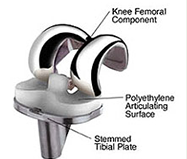
How Knee
Replacement Is Done
Once you are under general anaesthesia or spinal/epidural anaesthesia, an 6 inch cut is made in the front of the knee. The damaged part of the joint is removed from the surface of the bones, and the surfaces are then shaped to hold a metal or plastic artificial joint called Prosthesis. The Prosthesis is attached to the thigh bone, shin and knee cap with cement. When fit together, the attached artificial parts form the joint, relying on the surrounding muscles and ligaments for support and function.
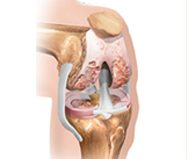
Why Knee
Replacement Is Done
Knee Replacement Surgery is recommended for people over the age of 50 with a stiff, painful knee that makes it difficult to perform even the simplest of activities usually due to osteoarthritis, rheumatoid arthritis or traumatic injuries and fractures.
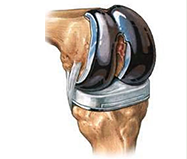
What to Expect
Before and After Surgery
Once you and your surgeon decide that this surgery is right for you, a date will be scheduled for your surgery. Several things may be necessary to prepare for surgery. For example, your surgeon might ask you to have a physical examination by an M.D. physician or your regular doctor. Because blood transfusions are likely to be needed during your surgery, you may want to donate one unit of your own blood or possibly two units if your surgeon feels it is needed. All preparations for surgery should be discussed with your surgeon.
The average hospital stay is usually 4 days for knee replacement surgery. Almost all patients show a dramatic improvement within a month. Most people report a major reduction or no pain in the damaged joint once it is replaced by the artificial joint.
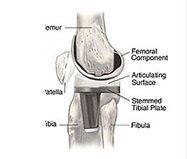
Recovery from
Knee Replacement Surgery
After knee joint replacement, many people are standing and moving the joint a day after the surgery. After about six weeks, most people are walking comfortably with minimal assistance. Once muscle strength is restored, people who have had knee joint replacement surgery can enjoy most activities except running and jumping.
